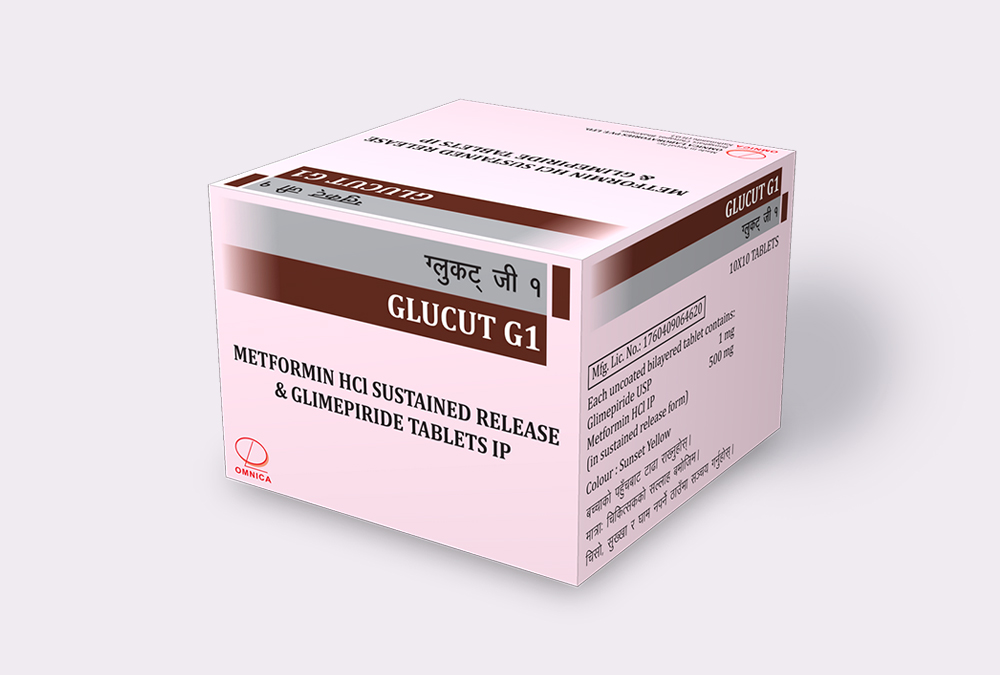
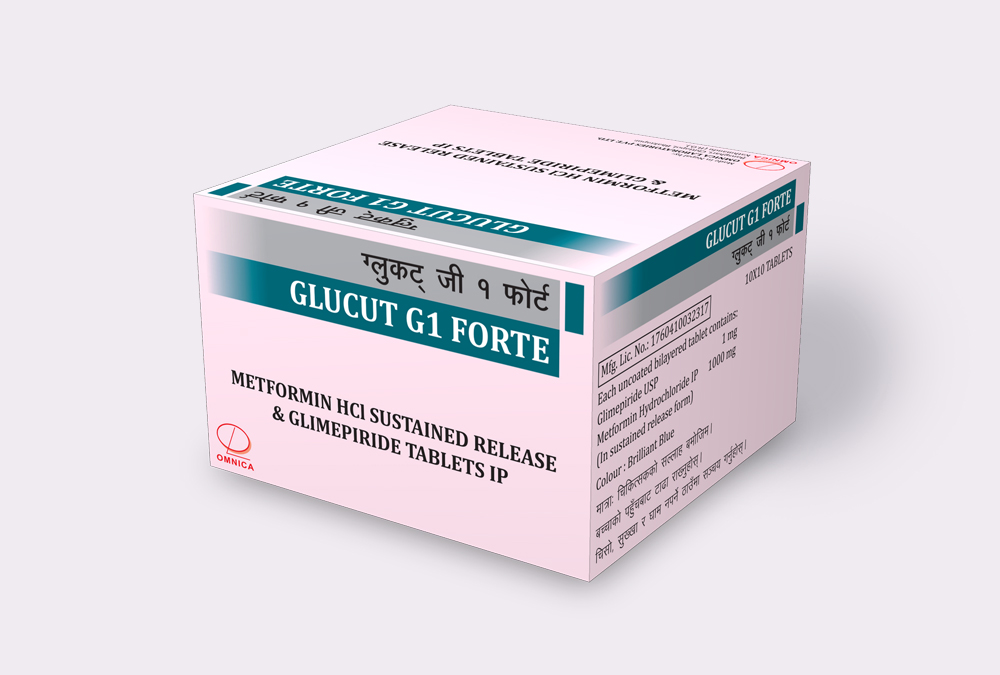
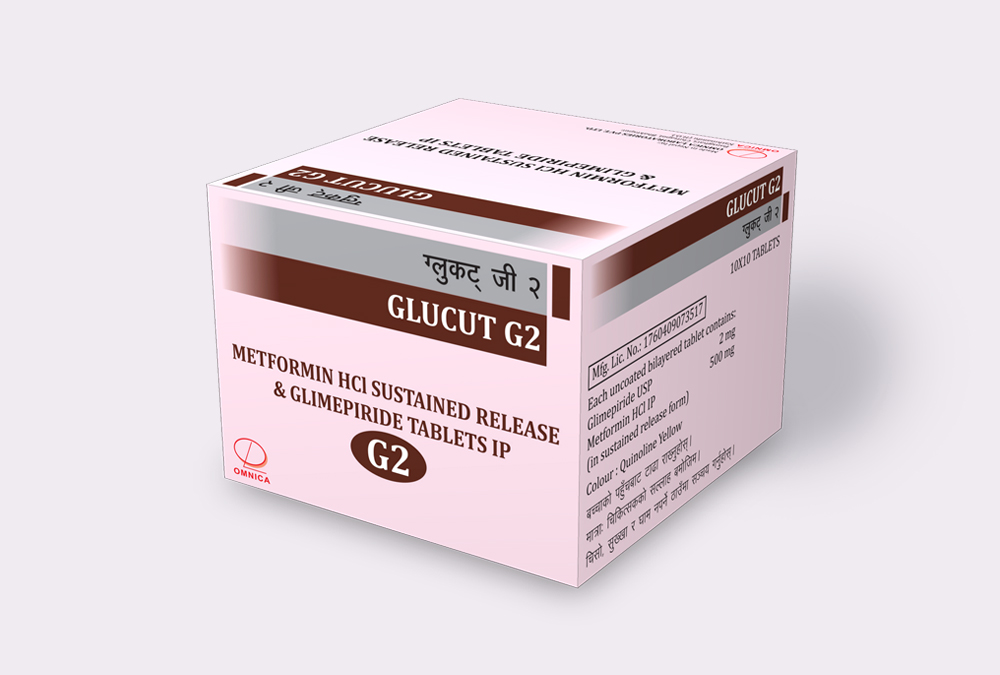
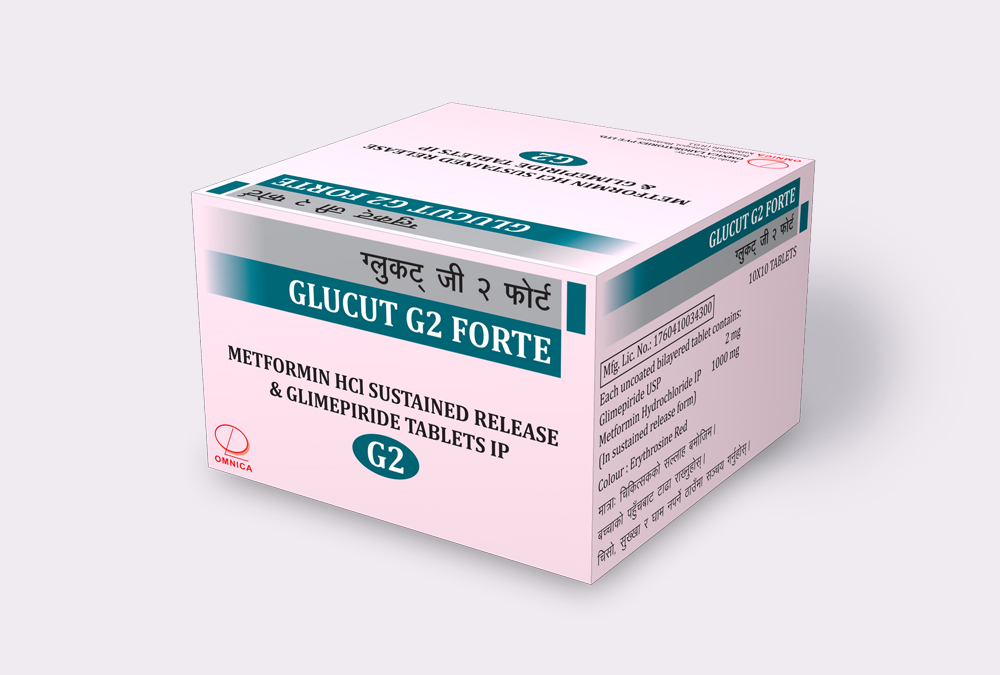
Brand Name: GLUCUT G1 / GLUCUT G2 / GLUCUT G1 FORTE / GLUCUT G2 FORTE
Generic Name:
GLUCUT G1: Metformin 500 mg + Glimeperide 1 mg
GLUCUT G2: Metformin 500 mg + Glimeperide 2 mg
GLUCUT G1 FORTE: Metformin SR 1000 mg + Glimeperide 1 mg
GLUCUT G2 FORTE: Metformin SR 1000 mg + Glimeperide 2 mg
Preparations: Tablets
Pharmacological Category: Antidiabetic
Mechanism of Action (MOA)
Metformin decreases blood glucose levels by decreasing hepatic glucose production, decreasing intestinal absorption of glucose and improving insulin sensitivity by increasing peripheral glucose uptake and utilization. These effects are mediated by the initial activation of AMP-activated protein kinase (AMPK), a liver enzyme that plays an important role in insulin signaling, whole body energy balance, and the metabolism of glucose and fats.
Glimepiride binds to its receptor on ATP-sensitive potassium channel present on the pancreatic cell surface thereby reducing potassium conductance. This causes depolarization of the membrane leading to increase in insulin production.
Glimepiride may also decrease rate of hepatic glucose production and increase insulin receptor sensitivity.
Pharmacokinetics
Glimepiride
- Absorption: Completely absorbed from gastrointestinal tract
- Bioavailability: 100%
- Initial Effect: 1 hour
- Peak Plasma Concentrations: 2 to 3 hours
- Protein Binding:5%
- Metabolism: Extensively metabolised to a hydroxy derivative and a carboxy derivative
- Elimination Half-life: 5-9 hours
- Excretion: Urine (60%) and faeces (40%)
Metformin
- Absorption: Slowly and incompletely absorbed from the gastrointestinal tract
- Bioavailability: About 50 to 60%
- Plasma Half-life: 2 to 6 hours
- Protein Binding: Negligible
- Metabolism: Does not undergo metabolism
- Elimination Half-life: 4 to 9 hours
- Excretion: Urine (unchanged drug)
Indication and Dosage
Type II Diabetes mellitus: OD to BD
Maximum daily dose: 8 mg for glimepiride and 2000 mg for metformin
Side Effects
COMMON: Anorexia, nausea, vomiting, diarrhoea, taste disturbance, weight loss, and impaired vitamin B12 absorption, hypoglycemia
OTHER: Dizziness, asthenia, headache, nausea
RARE: Allergic skin reactions, erythema, morbilliform or maculopapular eruption, pruritus, urticaria, gastrointestinal pain, agranulocytosis, anemia, aplastic anemia, leucopenia, pancytopenia, thrombocytopenia, cholestasis, elevation of liver enzyme levels, hepatic porphyria reactions, jaundice (rare), disulfiram-like reaction, hyponatremia
Contraindications
- Hypersensitivity
- Type 1 diabetes mellitus or diabetic ketoacidosis
- Renal disease or dysfunction (serum creatinine level 1.5 mg per dL or above in male, 1.4 mg per dL or above in female or abnormal creatinine clearance) which may result from cardiovascular collapse (shock), acute myocardial infarction and septicemia
- Patients undergoing radiologic studies
- Complicated gestational diabetic mellitus
Warnings / Precautions
- Metformin should not be given to patients with even mild renal impairment as metformin may predispose patients to lactic acidosis and renal function should be monitored throughout the therapy. Conditions associated with hypoxia, such as acute heart failure, recent myocardial infarction, or shock may increase the risk of lactic acidosis. Other conditions that may also predispose to lactic acidosis in a patient taking a biguanide include excessive alcohol intake and hepatic impairment.
- Metformin should be temporarily stopped for examinations using contrast media.
- Annual monitoring of vitamin B12 concentration is advised during long term treatment.
- Caution in patients with risk of severe hypoglycemia: elderly, debilitated, or malnourished; adrenal or pituitary insufficiency; patients with stress due to infection, fever, trauma, or surgery.
- Caution in hepatic/renal impairment.
- Persons allergic to other sulfonamide derivatives may develop allergic reaction to glimepiride.
- Hemolytic anemia may occur with glucose 6-phosphate dehydrogenase (G6PD) deficiency.
- Fluid retention, which may exacerbate or lead to heart failure, may occur.
- Combination use with insulin and use in congestive heart failure may increase risk of other cardiovascular effects.
Drug Interactions
- Alcohol may increase the risk of lactic acidosis as well as of hypoglycemia.
- Metformin diminishes phenprocaumon activity.
- With didanosine, stavudine and tenofovir fatal lactic acidosis has been reported.
- Cimetidine increases plasma metformin concentration.
- A diminished hypoglycemic effect, possibly requiring an increased dose of sulfonylurea, has been seen with adrenaline, aminoglutethimide, chlorpromazine, corticosteroids, diazoxide, oral contraceptives, rifamycins, thiazide diuretics, and thyroid hormones.
- An increased hypoglycemic effect has occurred with ACE inhibitors, alcohol, allopurinol, azole antifungals (fluconazole, ketoconazole, and miconazole), chloramphenicol, cimetidine, clofibrate and related compounds, coumarin anticoagulants, fluoroquinolones, heparin, MAOIs, tetracyclines, and tricyclic antidepressants.
- Beta blockers have been reported both to increase hypoglycaemia and to mask the typical sympathetic warning signs.
Pregnancy Category: C
Presentations
GLUCUT G1 : 10 X 10’s
GLUCUT G2 : 10 X 10’s
GLUCUT G1 FORTE: 10 X 10’s
GLUCUT G2 FORTE: 10 X 10’s


