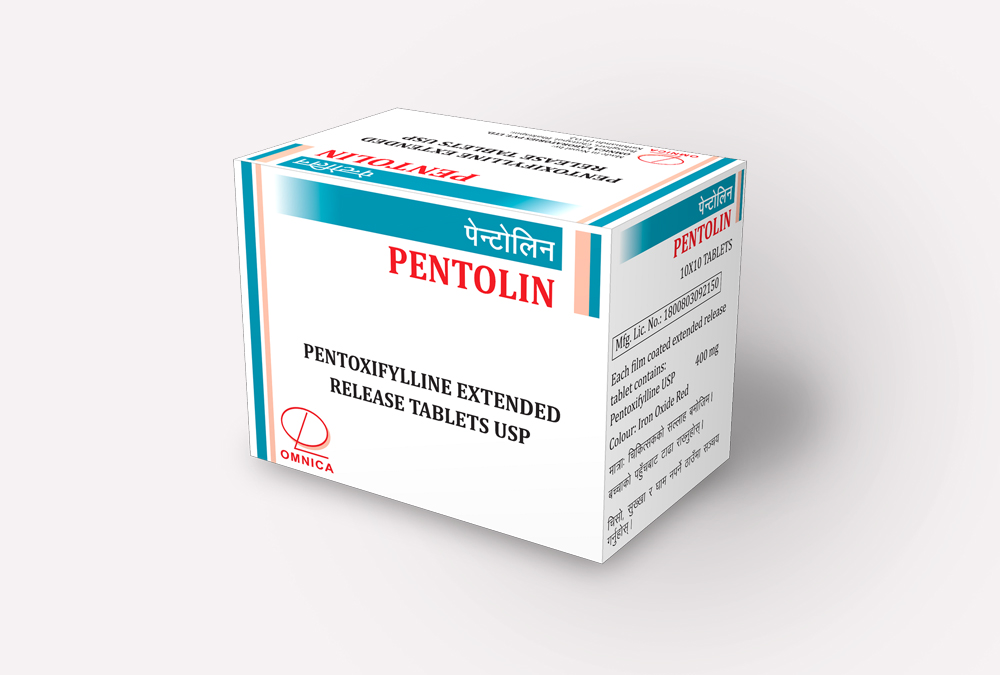
Brand Name: PENTOLIN
Generic Name: Pentoxifylline
Preparation: Pentoxifylline 400 mg Extended-Release Tablet
Pharmacological Category: Hemorrheologic agent
Mechanism of Action
PENTOLIN (Pentoxifylline) improves blood flow by decreasing blood viscosity and increasing red blood cell flexibility. It may increase tissue oxygenation through enhanced blood flow.
Pharmacokinetics
Absorption: Readily and almost completely absorbed
Bioavailability: 33%
Peak Plasma Concentration: 1 hour
Metabolism: Extensively metabolized, mainly in liver; Metabolites: 5-hydroxyhexyl, 3-carboxypropyl
Distribution: RBC Binding: Parent drug (45%); 5-hydroxyhexyl metabolite (40%)
Elimination Half-life: 24-48 min (parent drug); 60-90 min (metabolites)
Excretion: Urine (95%, principally as metabolites) and feces (4%)
Indications and Dosage
- Peripheral vascular disease including intermittent claudication and rest pain: 1 tablet three times daily. Continue for at least 8 weeks to determine efficacy. Reduce dosage to 400 mg twice daily if adverse GI and/or CNS effects develop. Discontinue if adverse effects persist at this lower dosage.
Administration: To be taken with or immediately after meals.
Side Effects
1-10%: Nausea, vomiting
<1%: Angina, anaphylaxis, anorexia, aplastic anemia, pancytopenia, conjunctivitis, angioedema, aseptic meningitis, chest pain, leukemia, leukopenia, cholecystitis, hepatitis, seizure, scotoma, thrombocytopenia, increased liver enzyme.
Contraindications
- History of intolerance to pentoxifylline or to xanthine derivatives such as caffeine, theophylline, or theobromine.
- Recent cerebral and/or retinal hemorrhage
Warnings / Precautions
- Discontinue at the first sign of anaphylactic/anaphylactoid reaction.
- Patients with chronic occlusive arterial disease of the limbs frequently show other manifestations of arteriosclerotic disease.
- In patients with hepatic or renal impairment, the exposure to pentoxifylline and/or active metabolites is increased. The consequences of the increase in drug exposure are not known
- Angina, hypotension, and arrhythmia reported occasionally in patients with concomitant coronary artery and/or cerebrovascular disease; consider the possibility that such effects may occur.
- Periodic examination for signs of bleeding recommended in patients who have risk factors potentially complicated by hemorrhage.
Interactions
- Bleeding has been reported in patients treated with pentoxifylline with or without concomitant NSAIDs, anticoagulants, or platelet aggregation inhibitors.
- Increased prothrombin time has been reported in patients concomitantly treated with pentoxifylline and vitamin K antagonists. Monitoring of anticoagulant activity in these patients is recommended when pentoxifylline is introduced or the dose is changed.
- Concomitant administration of pentoxifylline and theophylline-containing drugs leads to increased theophylline levels and theophylline toxicity in some individuals. Monitor theophylline levels when starting pentoxifylline or changing dose.
- Concomitant administration of strong CYP1A2 inhibitors (e.g., ciprofloxacin or fluvoxamine) may increase the exposure to pentoxifylline.
- Pentoxifylline has been used concurrently with antihypertensive drugs, beta blockers, digitalis, diuretics, and antiarrhythmics, without observed problems. Small decreases in blood pressure have been observed in some patients treated with pentoxifylline; periodic systemic blood pressure monitoring is recommended for patients receiving concomitant antihypertensive therapy. If indicated, dosage of the antihypertensive agents should be reduced.
Pregnancy Category: C; drug excreted in breast milk; discontinue therapy, or do not nurse
Presentation
PENTOLIN: 10X10’S


